How to Find the Best Thyroid Surgeon: What Truly Matters for Cure and Safety
If you or a loved one has been diagnosed with thyroid cancer, a suspicious thyroid nodule, or told that thyroid surgery is necessary, it is normal to feel overwhelmed. I hear this from patients every single day. You are suddenly navigating biopsies, imaging, medical opinions, and unfamiliar terminology.
How to Find the Best Thyroid Surgeon: What Truly Matters for Cure and Safety
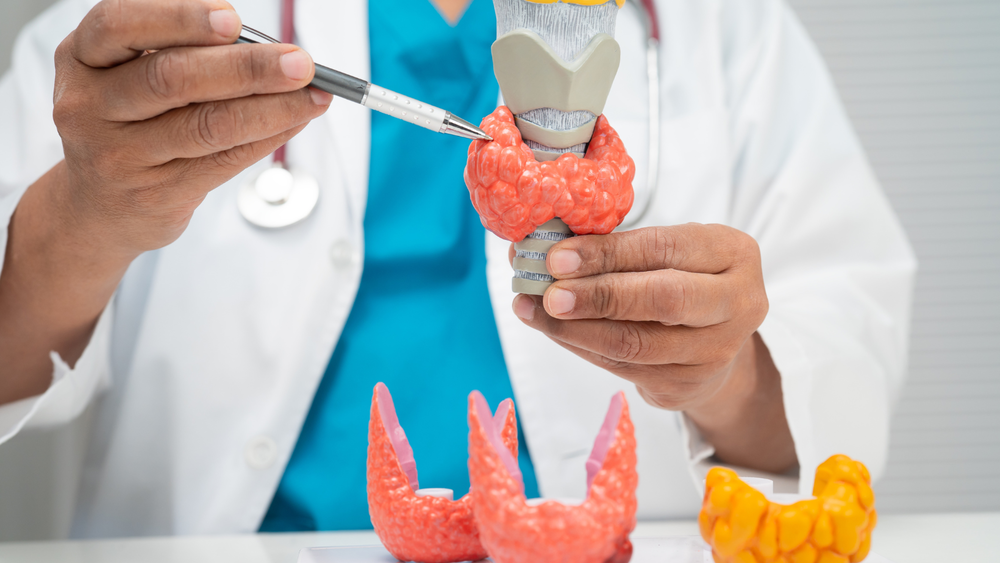
Choosing the best thyroid surgeon
This single choice will determine not only your chance of cure, but also your risk of permanent complications and the likelihood that you may need additional surgery in the future.
Who Is the Best Thyroid Surgeon?
The best thyroid surgeon is a high-volume specialist who performs hundreds of thyroid operations each year, has documented low complication rates, and achieves durable cure with the first operation.
Thyroid surgery is not a commodity. Outcomes vary widely based on surgeon experience, judgment, and volume.
Why Choosing the Best Thyroid Surgeon Matters
The surgeon you choose affects:
- Your chance of thyroid cancer cure
- Your risk of permanent voice changes
- Your risk of permanent hypoparathyroidism
- Your likelihood of cancer recurrence
- Your chance of requiring re-operative surgery
In my decades of experience performing thousands of thyroid operations, I have seen the lifelong consequences of well-meaning but inexperienced surgeons attempting procedures they were not adequately trained to perform. I have also demonstrated, through published outcomes, that thyroid surgery performed by true experts can be safe, efficient, and curative.
What Does “High Volume” Really Mean?
Why Surgeon Volume Defines the Best Thyroid Surgeon
Surgeon volume is the single most important predictor of safety and outcomes.
This has been clearly demonstrated in the medical literature. A landmark population-based study led by Dr. Julie Ann Sosa and published in Annals of Surgery showed that complication rates increase dramatically as surgeon volume decreases.¹
Key findings from this and similar studies include:
- Surgeons performing approximately one thyroid operation per year had complication rates nearly 90 percent higher than high-volume surgeons
- Patients treated by low-volume surgeons had hospital stays roughly twice as long
- Many studies define “high volume” as more than 25 thyroid operations per year
While outcomes improve above that threshold, performing 25 thyroid operations per year does not define the best thyroid surgeon.
How Many Surgeries Does the Best Thyroid Surgeon Perform?
The best thyroid surgeons perform 400 to 600 or more thyroid operations per year.
Twenty-five thyroid operations per year equates to one operation every two weeks. That level of exposure does not allow a surgeon to develop mastery of anatomy, judgment, and complication avoidance.
At the Clayman Thyroid Center, our surgeons perform that many thyroid operations in just a few days. This repetition is what allows surgery to be both safe and curative.
You would not trust a pilot who flies twice a month. You should not trust your neck to a surgeon who operates just as infrequently.
The 10,000 Hour Rule and Thyroid Surgery Mastery
Malcolm Gladwell popularized the concept that mastery requires approximately 10,000 hours of focused practice. In thyroid surgery, this level of experience is exceptionally rare.
The best thyroid surgeon:
- Knows when surgery is necessary and when it is not
- Anticipates anatomic variation rather than reacting to it
- Identifies critical structures without searching
- Prevents complications instead of managing them afterward
- Has managed thousands of complex and re-operative cases
To put this in perspective, the best thyroid surgeons in the world have personally performed more than 14,000 thyroid operations.
Lymph Node Management Separates Average Surgeons From the Best Thyroid Surgeon
Why Lymph Nodes Matter in Thyroid Cancer
Lymph nodes act as filters for cancer cells. In thyroid cancer, the central neck compartment is the most common site of early spread and recurrence.
What Do the 2025 American Thyroid Association Guidelines Recommend?
The 2025 American Thyroid Association guidelines promote a more conservative approach to central neck lymph node dissection in patients with differentiated thyroid cancer.²
Key guideline principles include:
- Avoiding prophylactic central neck dissection in most T1 and T2 tumors, despite reported microscopic lymph node involvement rates of 15 to 35 percent
- Suggesting that prophylactic dissection in T3 and T4 tumors may be considered, but only after weighing surgical risks
- Reserving comprehensive lymph node removal for patients with biopsy-proven or imaging-confirmed disease
Why Conservative Guidelines Create Risk in Inexperienced Hands
Key takeaway:
The ATA guideline approach limits lymph node removal to visibly abnormal nodes, which leaves microscopic disease behind and increases recurrence risk. In contrast, expert compartment dissection removes all lymphatic tissue in the central neck and produces significantly lower recurrence rates when performed by experienced thyroid surgeons.
Comparison of Lymph Node Management Approaches
|
Feature |
ATA Guideline Approach |
Compartment Dissection by Expert Surgeon |
|
Surgical technique |
Removes only visibly enlarged or abnormal lymph nodes |
Removes all lymph nodes and fatty tissue in the central neck basin |
|
Microscopic disease |
Left behind, resulting in persistent disease |
Removed, resulting in curative surgery |
|
Recurrence risk |
T1–T2: 15–35% recurrence risk |
0.2% recurrence rate for T1–T4 tumors at the Clayman Thyroid Center |
These differences explain why recurrence rates and the need for re-operative surgery are significantly higher when lymph node management is limited by surgeon experience rather than guided by oncologic principles.³⁴
Preoperative Evaluation: Avoiding Blind Thyroid Surgery
Finding the best thyroid surgeon is not just about the operation itself. It begins with the evaluation.
A surgeon cannot remove disease they do not know exists.
At our center, we routinely see patients who underwent thyroid ultrasounds elsewhere that failed to adequately evaluate cervical lymph nodes. In a review presented at the American Thyroid Association annual meeting, our team found that the majority of outside ultrasounds incompletely assessed lymph nodes, and a meaningful number of patients had previously unrecognized nodal disease that changed the extent of surgery required.⁵
For this reason, we perform comprehensive high-resolution ultrasound mapping of the central and lateral neck on every patient. This roadmap is essential. Without it, thyroid surgery is blind.
Questions to Ask When Choosing the Best Thyroid Surgeon
You are the CEO of your own health. When evaluating a thyroid surgeon, ask direct questions and expect direct answers.
Important questions include:
- Volume: How many thyroid surgeries do you personally perform each year? True experts perform 400 to 600 or more annually.
- Complications: What are your personal rates of permanent hypoparathyroidism and permanent nerve injury? The best thyroid surgeon will have rates under 1 percent.
- Lymph nodes: Do you manage only visible disease, or do you perform comprehensive central compartment dissection when appropriate?
- Outcomes: Do you track and publish your results?
- Experience: How many re-operative thyroid cancer cases do you manage each year?
Expert surgeons welcome these questions.
Quick Facts: Choosing the Best Thyroid Surgeon
-
Thyroid surgery outcomes vary dramatically based on surgeon experience
-
Surgeon volume is the strongest predictor of safety and cure
-
Performing 25 thyroid surgeries per year does not define true expertise
-
The best thyroid surgeons perform 400 to 600 or more thyroid operations annually
-
Incomplete lymph node management is a leading cause of recurrence
-
Re-operative thyroid surgery is far more dangerous than the first operation
-
Traveling to an expert center often prevents lifelong complications
Frequently Asked Questions
What makes someone the best thyroid surgeon?
The best thyroid surgeon is a high-volume specialist who performs hundreds of thyroid operations each year, has documented low complication rates, and achieves durable cure with the first surgery.
Does surgeon volume really matter for thyroid surgery?
Yes. Surgeon volume is the single most important predictor of outcomes. Multiple large studies show that complication rates increase dramatically as surgeon volume decreases.
Is it safe to choose a thyroid surgeon based on convenience or location?
No. Convenience should never be the deciding factor. Proximity does not correlate with expertise, and choosing a low-volume surgeon increases the risk of permanent complications and recurrence.
How many thyroid surgeries per year should my surgeon perform?
True experts perform 400 to 600 or more thyroid operations per year and limit their practice to thyroid surgery only.
Why is lymph node management so important in thyroid cancer surgery?
Lymph nodes are a common site of microscopic disease. Incomplete lymph node removal increases recurrence risk and often leads to re-operative surgery, which carries higher complication rates.
What are the risks of choosing an inexperienced thyroid surgeon?
Risks include permanent voice injury, permanent hypoparathyroidism, incomplete cancer removal, higher recurrence rates, and the need for additional surgery.
Is traveling for thyroid surgery really necessary?
Often, yes. Most community hospitals do not have true thyroid specialists. Traveling to a high-volume center can significantly improve safety and long-term outcomes.
In Summary
Choosing the best thyroid surgeon is the single most important decision a patient can make when facing thyroid surgery. Surgeon volume, experience, and outcomes matter far more than convenience or location, and the first operation offers the best chance for cure and lifelong safety.
Written by: Dr. Gary Clayman, MD, FACS, FACE, Founder & Medical Director, Clayman Thyroid Center
Chief Medical Officer, Hospital for Endocrine Surgery
Reviewed by: Dr. Jim Norman, MD, FACS, FACE, Found of the Norman Parathyroid Center at the Hospital for Endocrine Surgery
References
- Sosa JA, Bowman HM, Tielsch JM, et al. The importance of surgeon experience for clinical and economic outcomes from thyroidectomy. Annals of Surgery. 1998.
- Haugen BR, Alexander EK, Bible KC, et al. 2025 American Thyroid Association management guidelines for adult patients with differentiated thyroid cancer. Thyroid. 2025.
- Clayman GL, Agarwal G, Edeiken BS, et al. Reoperative thyroid surgery. Head and Neck. 2009.
- Clayman Thyroid Center outcomes data. Hospital for Endocrine Surgery.
- Clayman GL, Roy R, Walsh N, et al. Incomplete cervical lymph node evaluation on preoperative ultrasound in thyroid cancer patients. Presented at the American Thyroid Association Annual Meeting, 2018.